Sports data · Sports betting · iGaming

Turning sports data into live scores, statistics, betting, and iGaming products.

Developing fast, high-quality, conversion-focused products shaped by sports data, rules, and customer expectations.

Granular, operator-side fluency across industry players, user expectations, sports data models, and sports rules.

  • 01

    High-impact product discovery

    Not only what users expect — which data and presentation layers actually maximize satisfaction when an original concept becomes a product.

  • 02

    Fast, clean execution

    Shorter development cycles with fewer defects — because the work spans industry context, sports mechanics, and data architecture, not just tickets and UI.

From market map to live product — end to end.

  1. 01

    Map the market

    Research sports data providers and betting operators: their services, products, and how they compete.

  2. 02

    Own the sports layer

    Deep expertise in rules, periods, tournaments, and fundamentals across sports — including markets not yet offered to bettors in Türkiye.

  3. 03

    Bridge data and product

    Train product teams to read raw provider data the way developers do — cutting discovery and build time significantly.

  4. 04

    Turn data into product

    Shape feeds into modern, product-led experiences using CRM tooling and A/B testing where it matters.

  5. 05

    Tighten delivery

    Support UAT with test teams so release cycles stay clear, repeatable, and low-friction.

  6. 06

    Scale after launch

    Drive continuous improvement from live performance, industry shifts, and customer feedback.

Track record — deep on Nesine, built in the industry.

Nesine

Product Development Manager

Responsible for third-party service and widget integrations, and for building modular first-party products that can be placed and reused across the product surface with minimal friction.

Highest-impact products shipped to customers

Global first · B2B partner

Instant Highlights

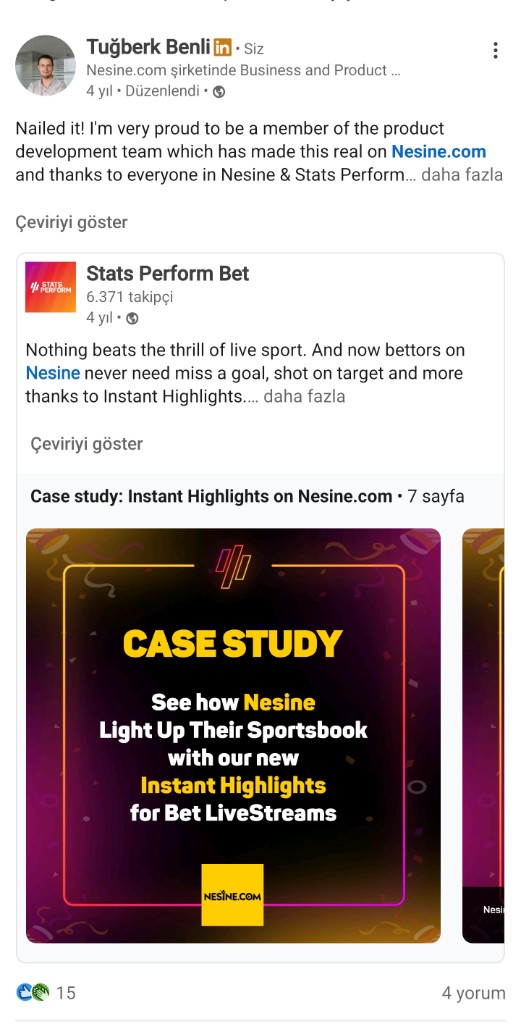
During routine market research, we saw a leading sports data provider building highlight distribution from its live football coverage, a product that evolves year to year. The concept was original; the commercial upside was clear.

We offered to help develop and go to market, including support for selling into sports betting. The prize: be the first betting operator to put highlights directly in front of customers. We stress-tested the data, flagged bugs to our B2B partner, and shaped how to fix them. Under the exclusive agreement, we launched Highlights — not only first in Türkiye, but first globally in betting.
Multi-sport intelligence

İpucu

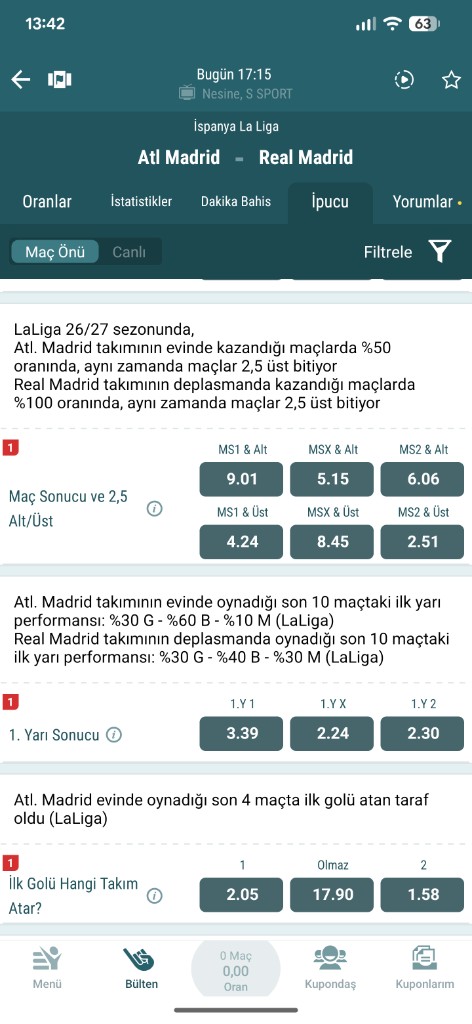
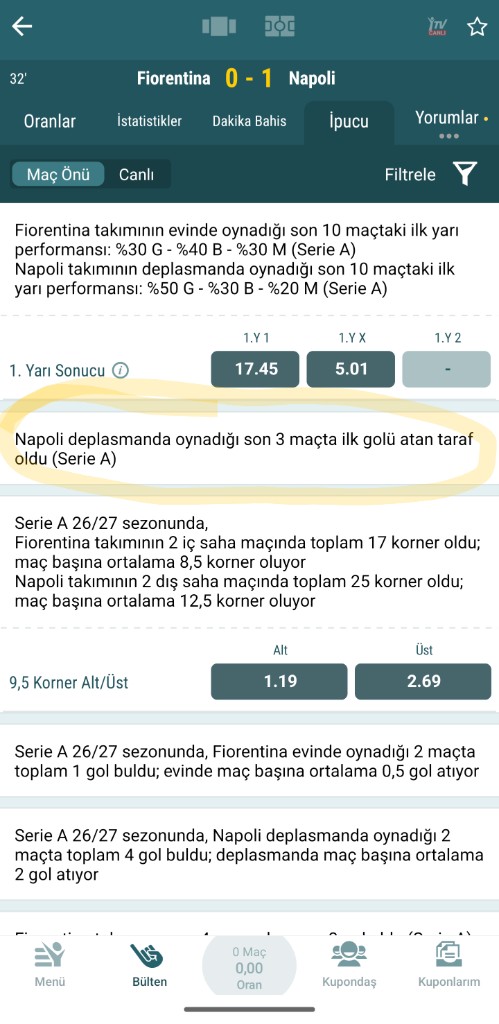
Fed by multiple provider feeds, İpucu filters signal from noise and surfaces meaningful outcomes from pre-match and live patterns. It carries the deepest coverage and the highest number of fact types across markets — not only football and basketball, but tennis, volleyball, and handball.

That breadth differentiates on minor sports and shows users we invest beyond the usual fixtures — unlike most competitors.

Live insight · notifications

xG & variants

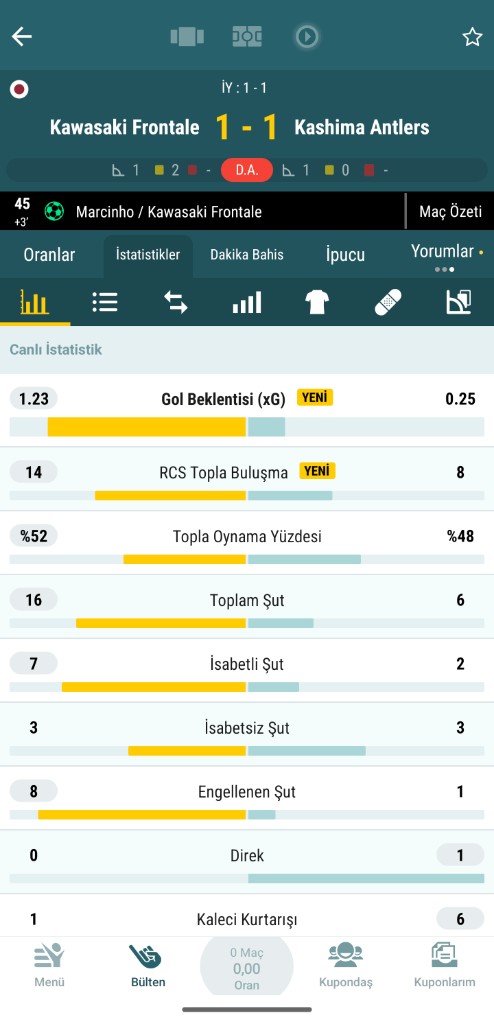
As media made expected goals (xG) a mainstream match statistic, sports betting still lagged. Users prefer to bet on matches they watch — or at least follow live. xG is built from 50+ on-pitch variables and only arrives through a provider feed.

We live-tested provider xG data and chose the most accurate source. We were not first to publish in betting — but we were among the best at using it wisely: not only xG on screen, but related signals such as touches in the opposition box, plus push notifications users can tune by threshold so they get alerts when the numbers matter to them.

First in Türkiye · owned widget

Lineup & field

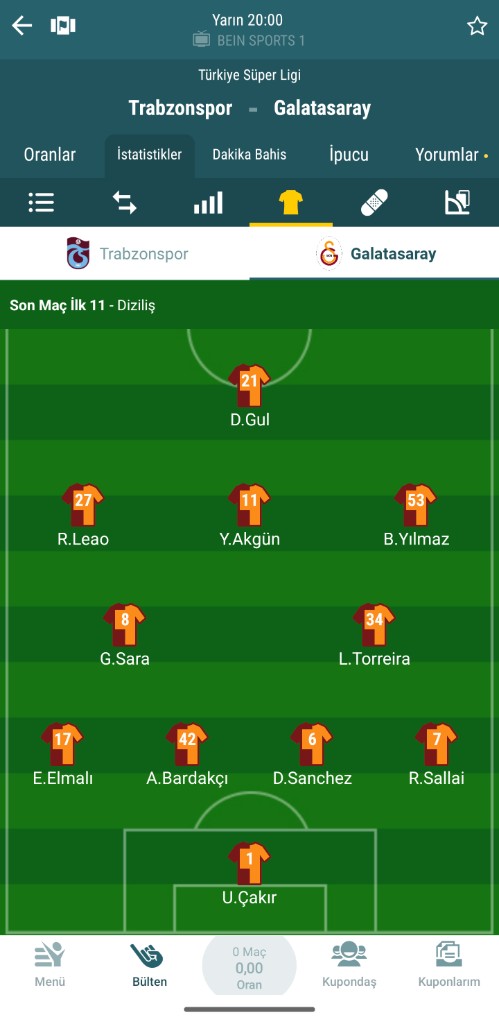
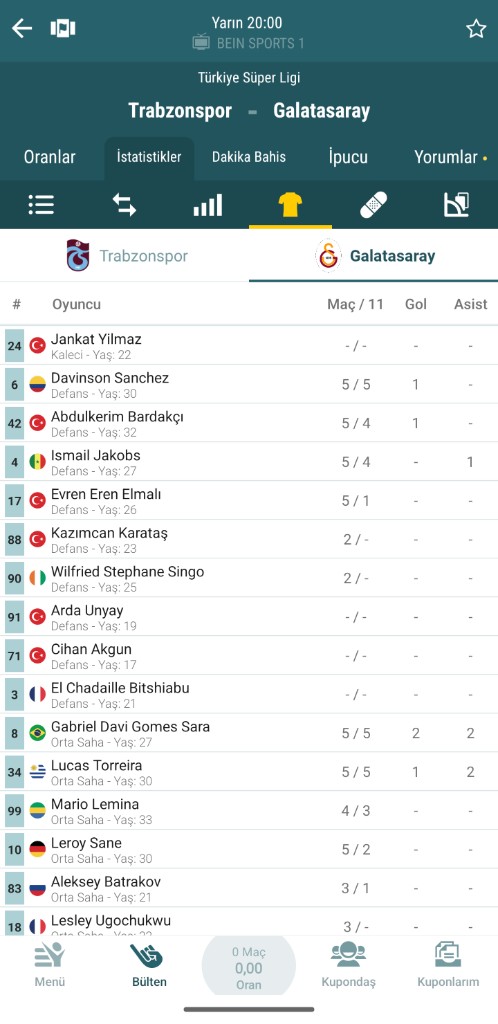
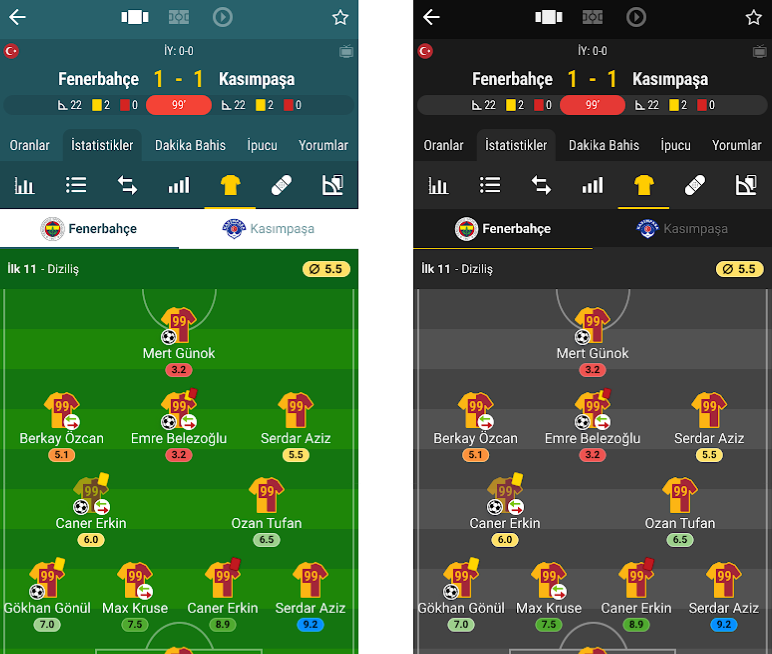
Without a hosted third-party service, we became the first operator in Türkiye with our own lineup widget. We combined possible formations with teams and players, placed athletes from each side’s last-used shape, and gave users a clear view of who is missing from the previous match — plus last-match actions — so they can judge squad strength before the next kickoff.

Betting decision support

Player Profile

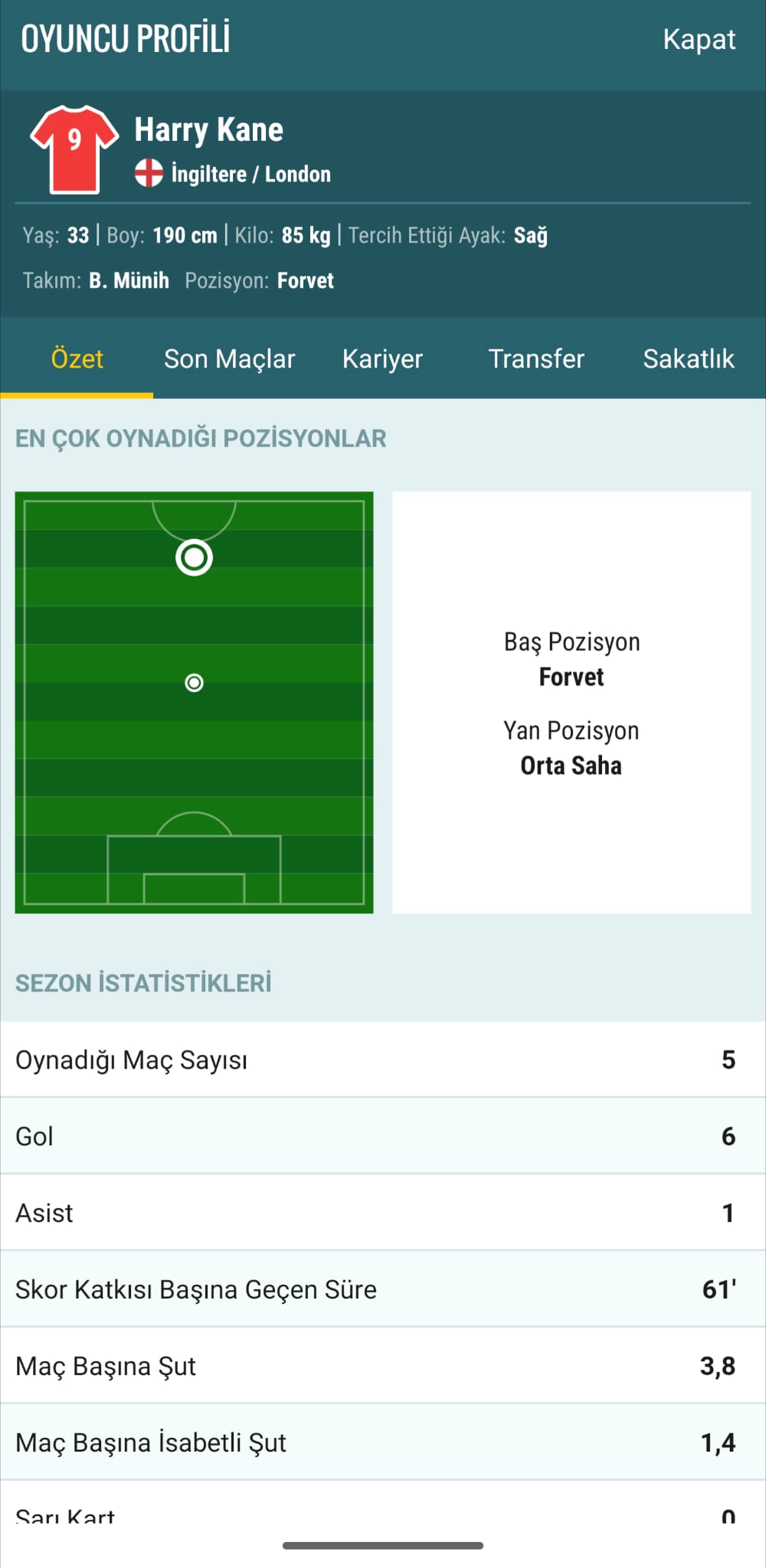
Users dig into careers, transfer fees, loans, and current vs past-season stats. After launch, Şans Girişim — Türkiye’s sports betting authority — introduced player betting markets, and Player Profile became one of the most useful sources for deciding what to bet.

Retention · AI-assisted

Live Chat

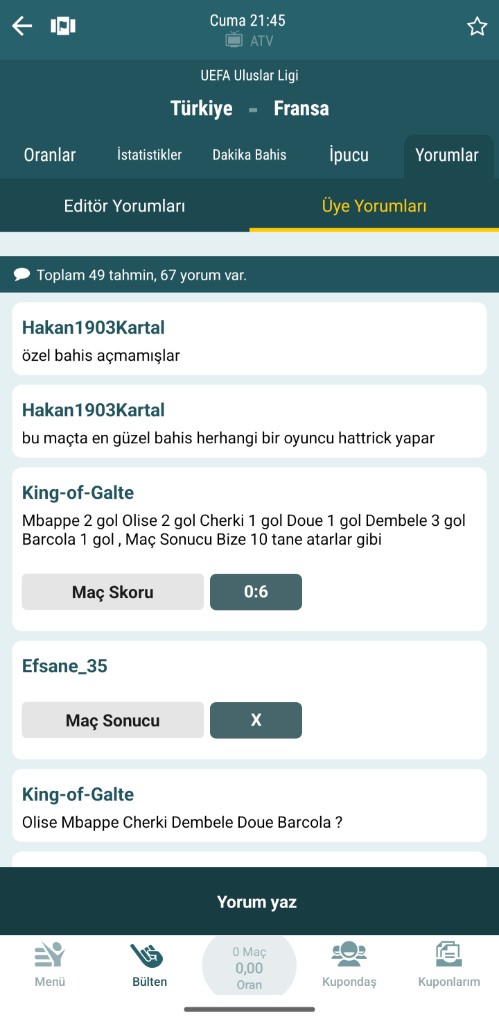
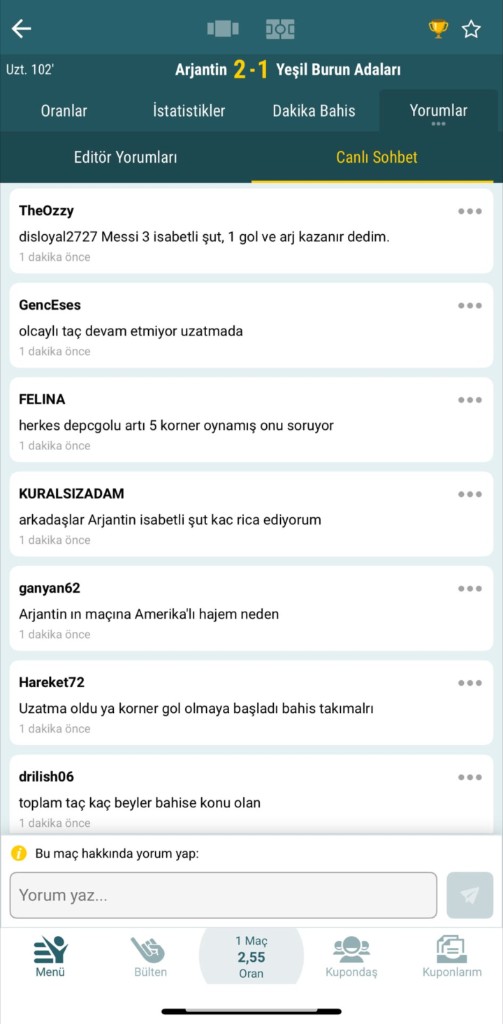
Surveys and A/B tests showed users disliked placing bets on our site or app, then jumping to separate live-score apps just to follow the match and chat with other fans. Live Chat delivered more value than expected.

With AI in the chat, we surface what people need pre-match and live — whether they are betting or only following. Complaint signals also helped us catch minor bugs and ship improvements faster than before.

AI can raise every product in this market — if the data layer is ready for it.

The macro shift

As in most industries, AI can process vast numbers of variables at once and surface patterns people miss. In sports data and betting, the real value is not novelty — it is training models to deliver actionable insight to users, then improving with every new match dataset so accuracy and predictive utility compound over time.

The industry gap

That approach could lift almost every product and service in the landscape. Adoption is still low, and progress is slow. The bottleneck is foundational: models need deeply structured, domain-specific context to draw meaningful correlations — and most legacy platforms simply do not provide it.

Unlocking contextual in-play intelligence

  • 01

    Pace & metric correlations

    Translate live events into pace indicators and historical analogues — for example: when Team X exceeds a shot threshold under matching conditions, similar matches have historically produced at least N corners. Actionable, not decorative.

  • 02

    Dynamic tactical adaptations

    Detect real-time tactical shifts — a substitution that re-shapes positions — and map them instantly against history: the team’s record in the new shape, or that player’s impact in that exact zone. Directional guidance while the match is still live.

Synthesize live actions, formations, minute, scoreline, ball-in-play time, and micro-variables against historical sets — then ship those insights across product surfaces. That is how engagement, retention, and sustained traffic compound.

The white space

AI-driven product personalization based on user behavior

User choices and product traffic feed the loop; as matches progress, AI personalizes and improves what gets shown next.

In an AI-first era, the biggest untapped gap is not only algorithmic answers — it is guiding users to get better at using AI through continuous personalization.

Example — adaptive match-matching: if users can query historical matches similar to a live game with custom parameters, the engine should not stay static. After the match, it can retroactively score those criteria, find correlation methods that would have produced stronger analogues, and push refined parameters back to the user for the next query.

That moves the product from a static search tool to a self-optimizing personal co-pilot — with personalization embedded in the algorithm itself, not bolted on as UI preference.

Build a brand whose edge is a team that speaks both data and sport.

Thesis

Winners will integrate AI across the full product surface — not as one feature, but as a connective layer. AI should live inside every product and page, let those products talk to each other, and learn from real user journeys: routines, sequences, and how people respond to the content and data on screen at that moment — including how usage rises or falls as that content changes.

Map the journey end to end, and you stop guessing. You know when to surface a product, which one to show, and how to present it.

What I’m building toward

My main goal is to build a new brand with people who already share that standard — product and IT teammates with the knowledge and drive to ship for an AI-led sports era. Hire and advisory seats are welcome doors in; the destination is a brand worth building.

What that brand should be

  • Innovative by default

    AI as how products connect and improve — not decoration.

  • Fast and timely

    Ship the right products at the right moment, in short cycles.

  • User-expectation fluent

    Know what bettors and fans actually need in context.

  • Sports-tech sharp

    Use modern tech where it raises the sports experience — not where it only looks new.

The real edge

The team

The brand’s main power will not be a single feature. It will be the team. Beyond primary job titles: product people who can read and reason about data the way builders do, and developers who understand sports rules, terms, and match mechanics.

In a sports company, that cross-fluency is not a nice-to-have. It is the difference-maker in the race — it cuts discovery time, reduces wrong builds, and turns domain knowledge into products that actually fit how the sport works.

Proof of how we work with partners

Strength of team

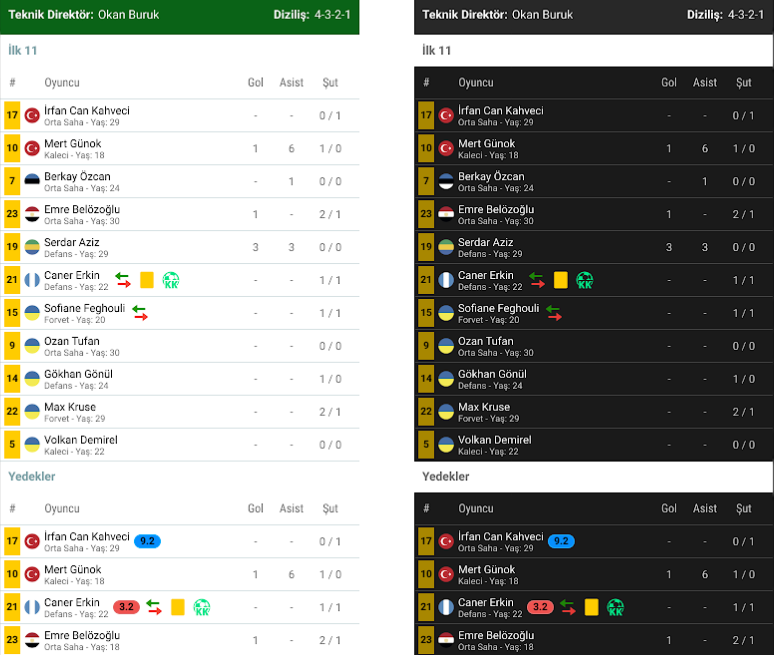
Player Ratings — how domain fluency plus B2B partnership turns into a first-mover product.

B2B partner · first in betting

No sports betting operator here showed live player ratings. We set out to be first — and found a leading sports data provider had no scale fit for platforms like ours. Scores ran 0–100; even strong performances could look weak, and the weights did not respect how the same action should score differently by position.

Together we rebuilt it into a clear 5.0–10.0 range users can read at a glance. Our B2B partner gained a product they could sell into betting. We gained first launch — and after that the relationship deepened: we stayed an early partner for new concepts and joint builds, which kept us ahead of direct competitors.

Next step

Let’s schedule a follow-up on a role or advisory seat — and talk seriously about building this brand with people at this level of knowledge and passion.